Speed to lead: the five-minute rule most sales teams break
By Jawad Chafai, RevOps and GTM engineer ·
A web lead is never more interested than in the minutes after they hit submit. The research on lead response is old, but its lesson keeps getting ignored. Here's what it says, and a simple flow to fix it.
Someone fills in your form. They want to talk. Right now, you're the most interesting company in their day.
An hour later, they're in a meeting. By tomorrow, they've booked a call with your competitor, or forgotten why they clicked.
In revenue operations, this is one of the cheapest problems to fix and one of the most expensive to ignore. It's called speed to lead: the time between a lead raising their hand and a human getting back to them.
What the research found
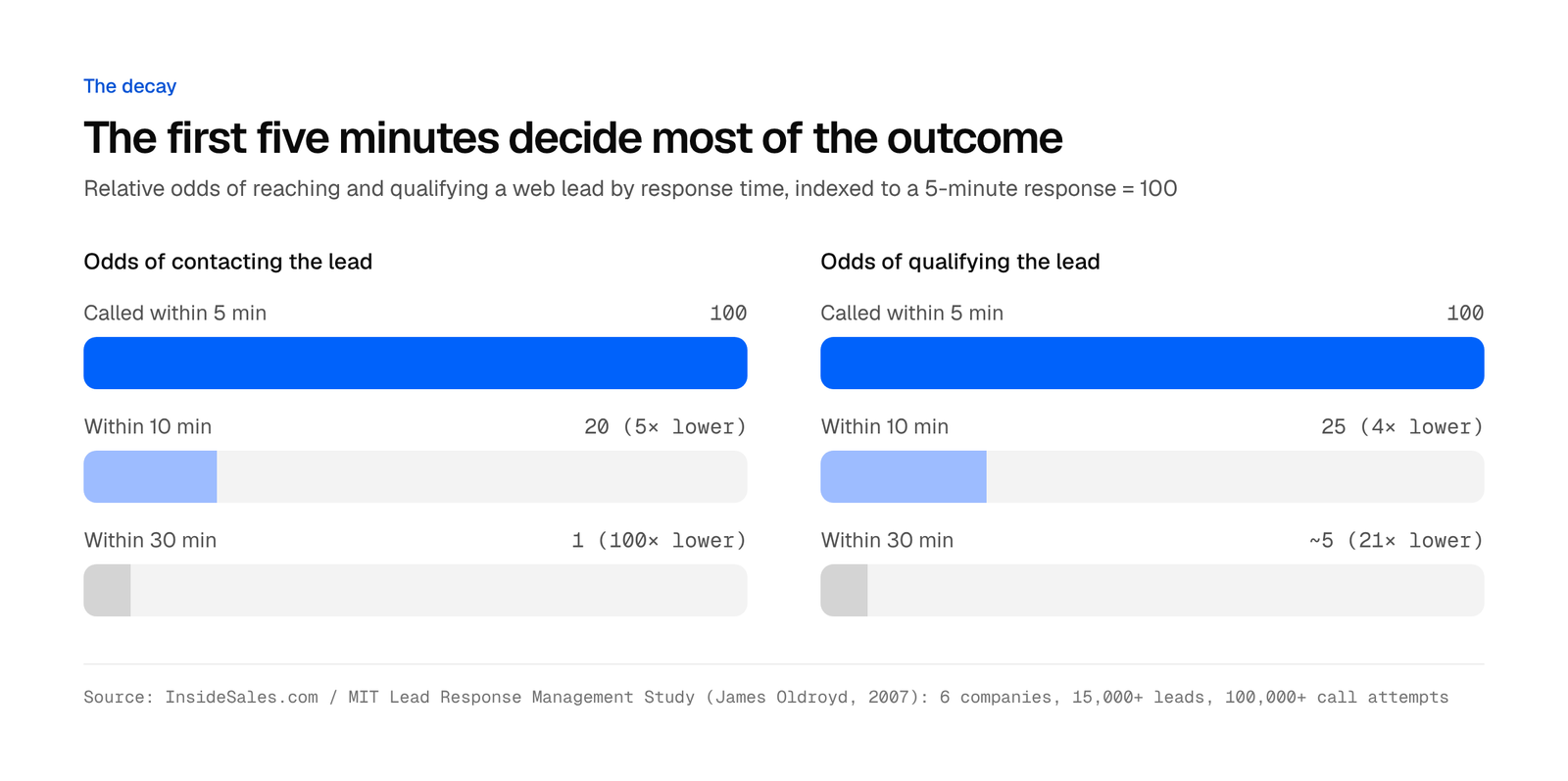
The best-known data comes from the Lead Response Management study by James Oldroyd, run with InsideSales.com and presented in 2007. It looked at three years of data from six companies: more than 15,000 web leads and over 100,000 call attempts.
The headline result is brutal. Compared with calling within five minutes, waiting 30 minutes made the odds of reaching the lead 100 times lower, and the odds of qualifying them 21 times lower. Even the jump from five to ten minutes cut the odds of contact by five times.
In 2011, Oldroyd and his co-authors followed up in Harvard Business Review with The Short Life of Online Sales Leads. Their conclusion was blunt: "most companies are not responding nearly fast enough."
A fair warning: this data is old, it comes from US companies, and the study was built on a sales vendor's platform. Channels have changed since 2007. But the mechanism hasn't. Interest decays fast, and whoever answers first gets the conversation.
Timing helps. Speed helps more
The same study also looked at when to call. Wednesdays and Thursdays worked best, with Thursday reaching leads 49.7% more often than Tuesday. Late afternoon (4 to 6 pm) was the best window to reach people, and 8 to 9 am the best to qualify them.
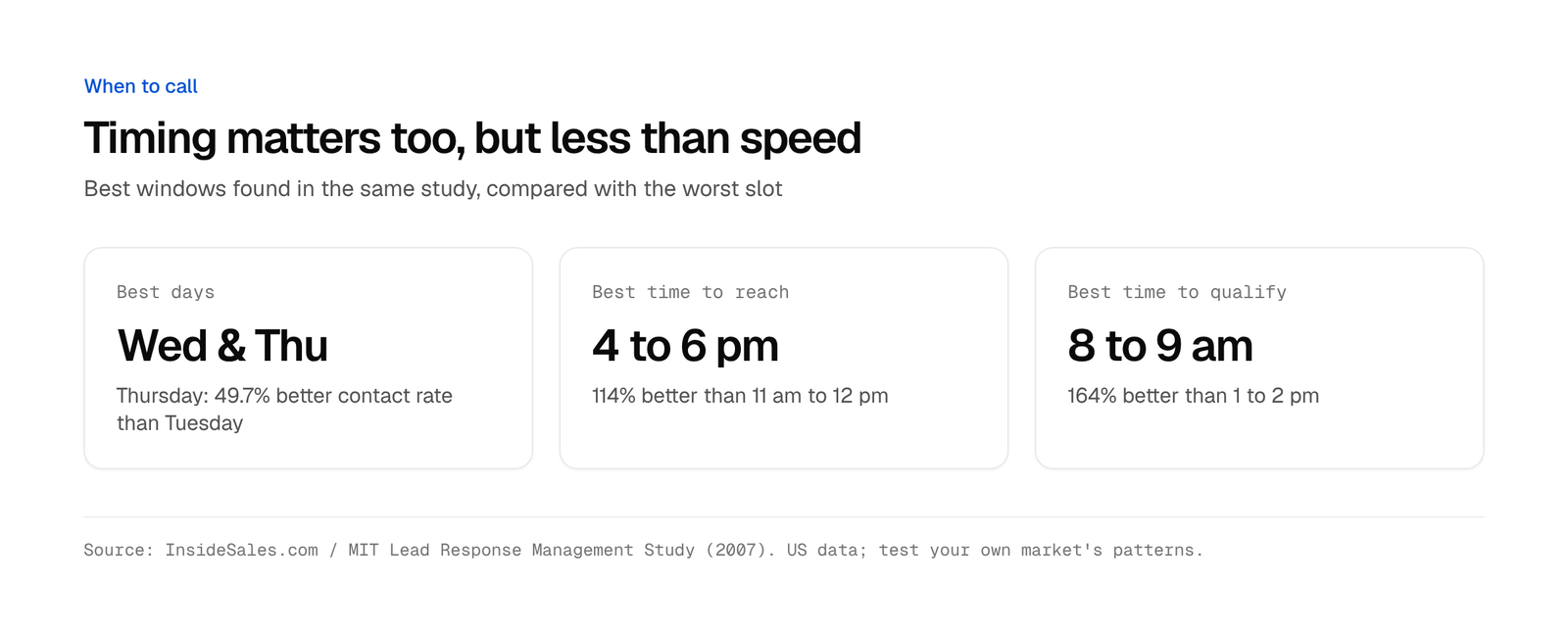
Useful, but secondary. The study's authors noted that the effect of response time dwarfed both day and hour. If you only fix one thing, fix the delay.
Why teams are slow, even when they know
Almost nobody is slow on purpose. In my experience it comes from the system, not the people:
- Leads land in the wrong place. A shared inbox, a spreadsheet, a notification nobody owns.
- Nobody owns the first touch. Marketing generated it, sales will "get to it", and the lead waits in between.
- Reps don't have context. They want to read up before calling, so the call slips to tomorrow.
- Working hours. Leads arrive at 9 pm, and by the next morning they're cold.
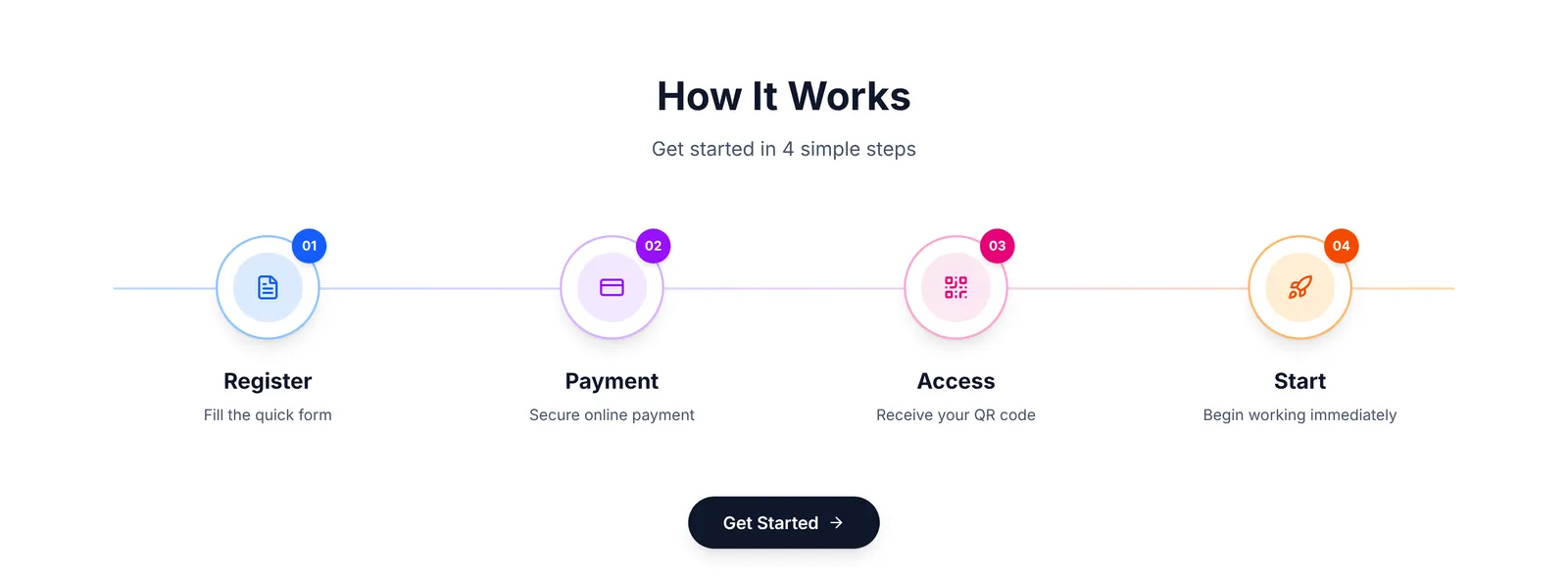
I saw this first-hand when we piloted Pass2Work, a coworking membership for two hubs in Casablanca and Rabat. The landing page and the automatic welcome email worked from day one. The weak link was the human follow-up: one of the first lessons we wrote down was that our callback speed had to improve.
A speed-to-lead flow you can build in an afternoon
You don't need an expensive platform. You need every new lead to trigger three things at the same moment.
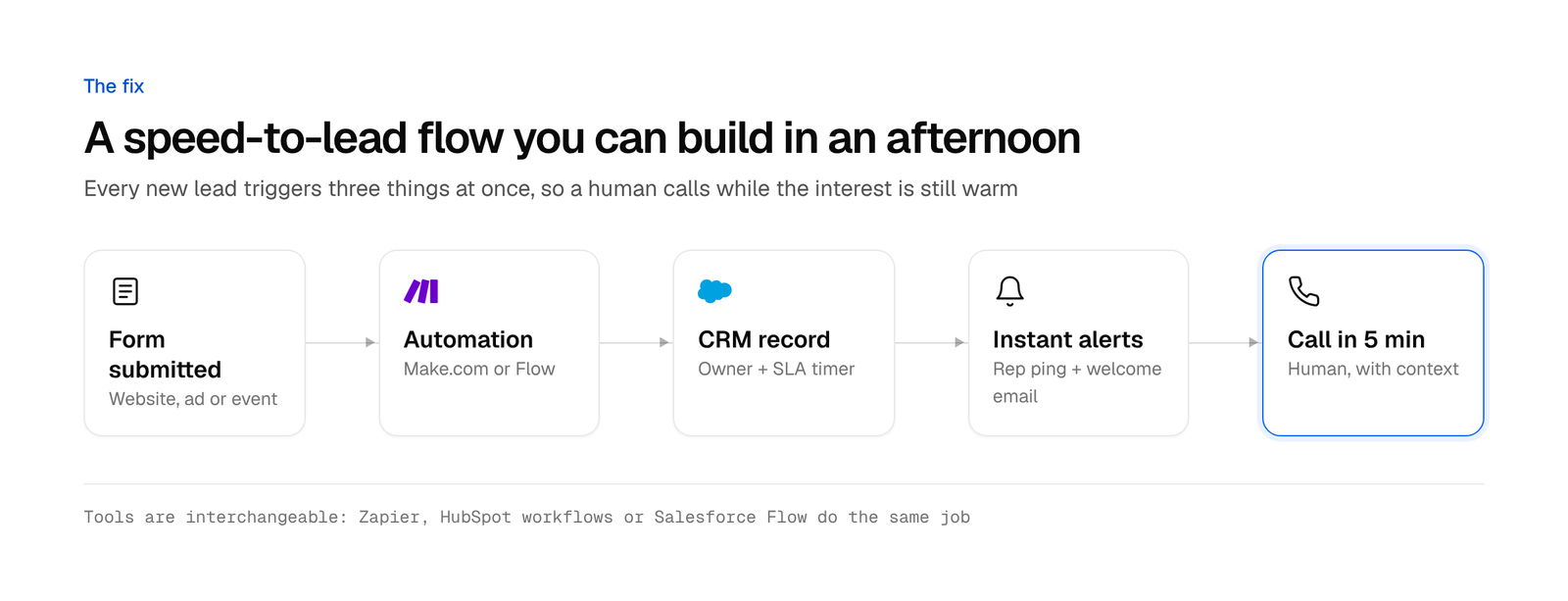
- Create the record and assign an owner instantly. In Salesforce, a Web-to-Lead form plus an assignment rule or Flow does it. In other stacks, Make.com, Zapier or HubSpot workflows do the same.
- Start a visible clock. Add a "first response due" time and a report of leads that breached it. What gets measured gets fixed.
- Alert a human where they already are. A Slack or WhatsApp ping to the owner beats an email they'll read tomorrow.
- Send an instant, useful reply. Not "we received your request", but the next step: a booking link, the pricing, or a short guide. It buys you time and sets expectations.
- Give the rep context in the alert. Who they are, what they asked, which page they came from. No research needed before dialling.
Here's what that first automatic step looked like for Pass2Work: register, pay, get a QR code, start working. The page sets expectations; the automation does the welcome; a human closes the loop.
Five rules to take with you
- Five minutes is the target, an hour is the limit. After that, you're re-engaging, not responding.
- Every lead needs one owner, assigned automatically, not by whoever notices first.
- Measure first-response time and review breaches every week.
- Automate the first touch, not the relationship. Instant reply by machine, real conversation by a person.
- Remove the excuse to wait. Put context in front of the rep so they can call straight away.
If your team is generating leads and losing them in the gap before the first call, that gap is usually a systems problem. It's the kind of thing I like fixing. More at chafaijawad.com.