Digital Morocco 2030: where the tech jobs will come from, and who will fill them
By Jawad Chafai, RevOps and GTM engineer ·
Morocco wants 240,000 digital jobs and 100,000 young people trained every year by 2030. Meanwhile, more than a third of 15 to 24-year-olds are unemployed. Training targets alone won't close that gap. Here's what will.
In September 2024, Morocco announced one of the most ambitious digital plans on the continent. By 2030, the country aims to create 240,000 direct jobs in the digital sector and train 100,000 young people in digital skills every year.
I work on the ground of that ambition: running learner communities, then operations, and now revenue for a B2B team in Morocco. From where I sit, the plan's targets are the right ones. But the hardest part isn't in the numbers. It's in the bridge between training someone and that person actually getting hired.
The plan, by the numbers
Digital Morocco 2030 was unveiled on 25 September 2024 by the Minister of Digital Transition, Ghita Mezzour. Its headline targets:
- 240,000 direct jobs in the digital sector by 2030
- 100,000 young people trained in digital every year, up from 14,000 in 2022
- 3,000 startups, with fundraising rising from 260 million MAD in 2022 to 7 billion MAD by 2030
- Digital export revenue growing from 17.9 billion MAD in 2023 to 40 billion MAD
- 100 billion MAD of contribution to GDP, backed by 11 billion MAD committed for 2024 to 2026
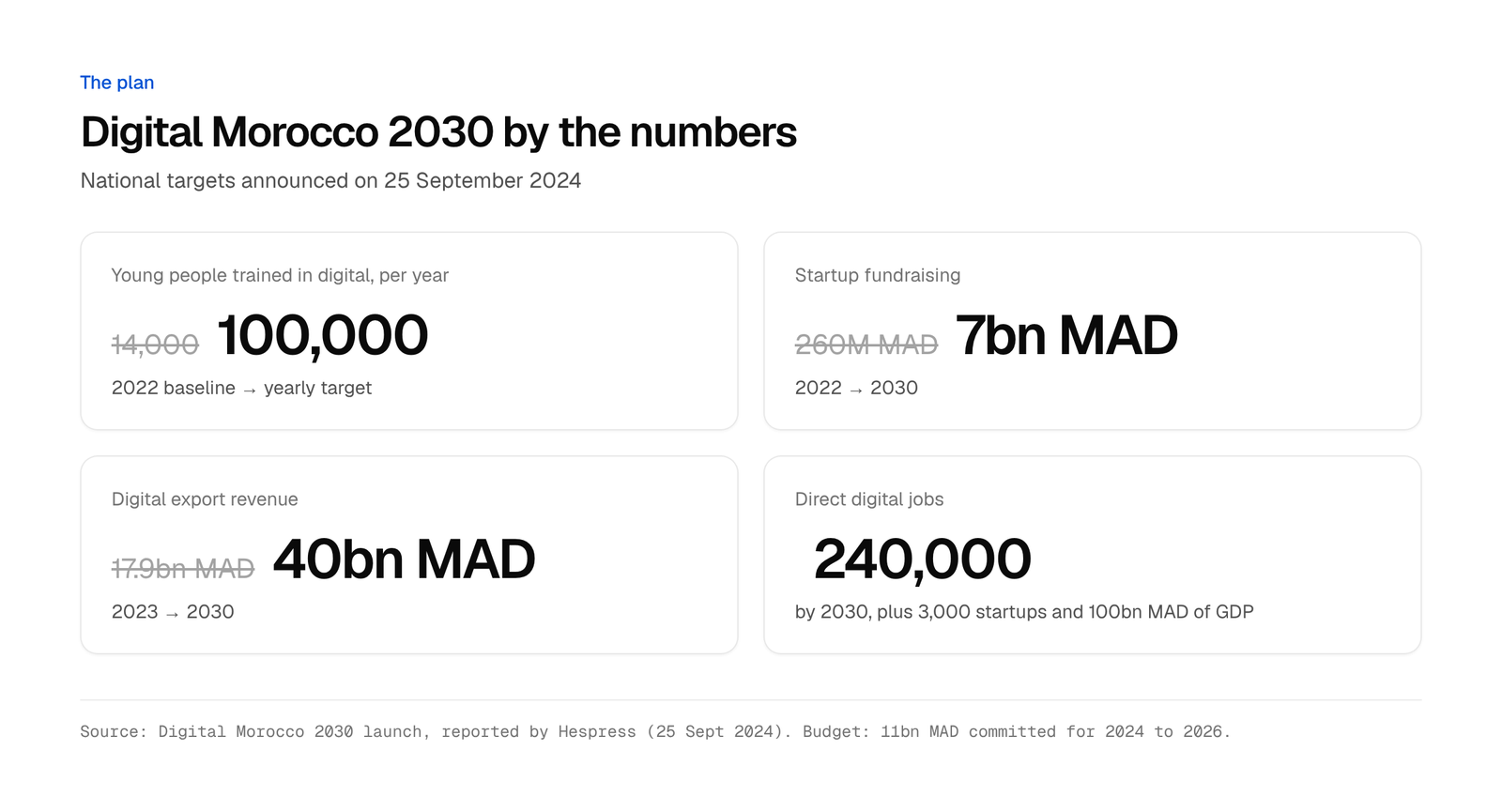
Going from 14,000 to 100,000 trained people a year is a seven-fold increase. That is a huge pipeline to build in a few years.
The other side of the picture
Now look at who that pipeline is meant to serve.
According to Morocco's High Commission for Planning (HCP), national unemployment was 13% in 2025. For young people aged 15 to 24, it was 37.2%, and it was the only age group where unemployment rose. Among graduates, it stood at 19.1%.
And a joint HCP, ILO and EU report found that 2.9 million Moroccans aged 15 to 29 were NEET in 2023: not in employment, education or training. That's about one in three. Over 72% of them are women, and roughly 76% have no diploma.
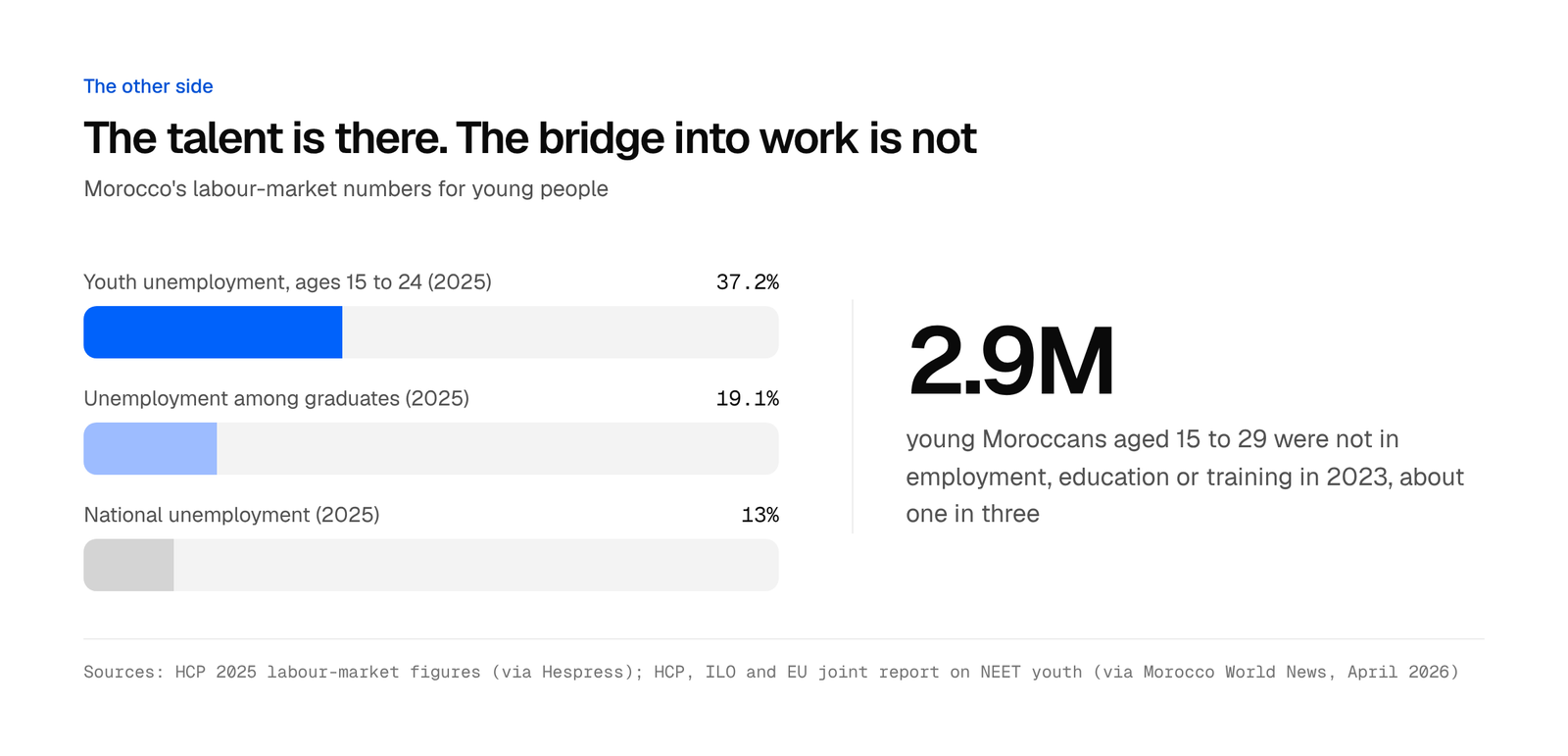
So the challenge isn't only the number of seats in training programs. It's that a large share of the young people who most need these jobs are not in any program at all, and many of those who do have qualifications still can't get through the door.
Three things that will decide whether the plan works
1. Training has to start from real demand
The traditional path is train, certify, search, and hope. Generic skills come first, and employers arrive at the end, if at all.
The programs that work tend to flip it: start from a real job opening, identify the real skills gap, train for that gap, then hire. When employers shape the training, graduates arrive with exactly what the role needs, and the "search and hope" step disappears.
2. Enrolment is not the metric. Activation and completion are
A target of 100,000 trained people a year will be measured by enrolment unless someone insists otherwise. But enrolling is the easy part. The real drop-off happens in the first weeks: people who sign up and never start, or start and quietly fade away.
This is where community work matters more than most people think. When I ran activation and retention campaigns for more than 1,100 learners, segmenting people by where they were stuck and giving each group one clear next step lifted activation by up to 11%, cut non-starters by up to 14%, and improved payment compliance. Earlier, structured outreach to at-risk learners contributed to a 14% improvement in cohort completion. None of that came from more content. It came from noticing who was slipping and reaching them in time.
3. Companies need to be ready for the talent
It's not only about supply. Moroccan companies are being asked to adopt AI and digital tools faster than their teams can absorb them. In September 2026, an AI Strategy Lab in Casablanca brought business leaders together for a panel and hands-on workshop tables on turning AI from a talking point into a working plan.
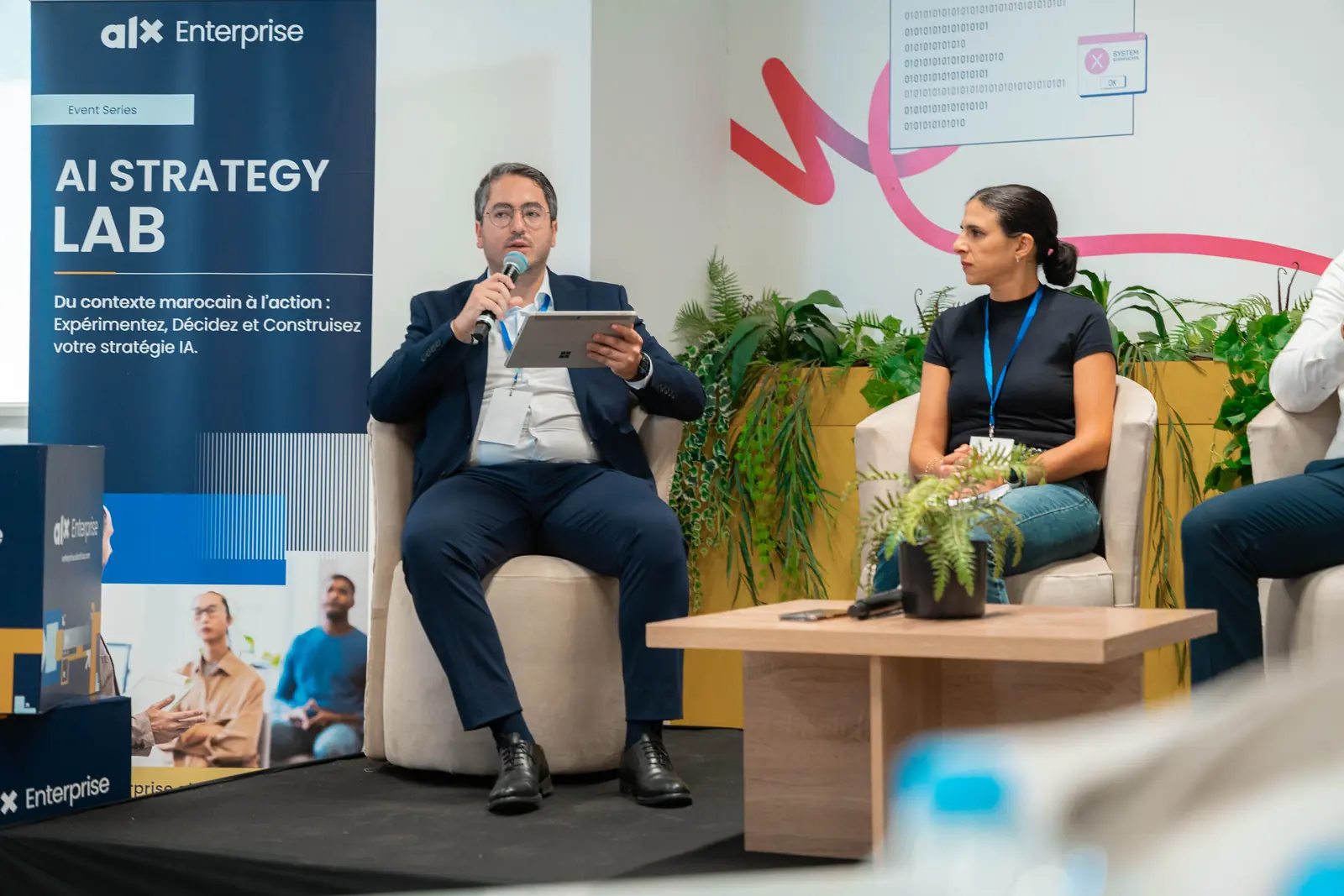
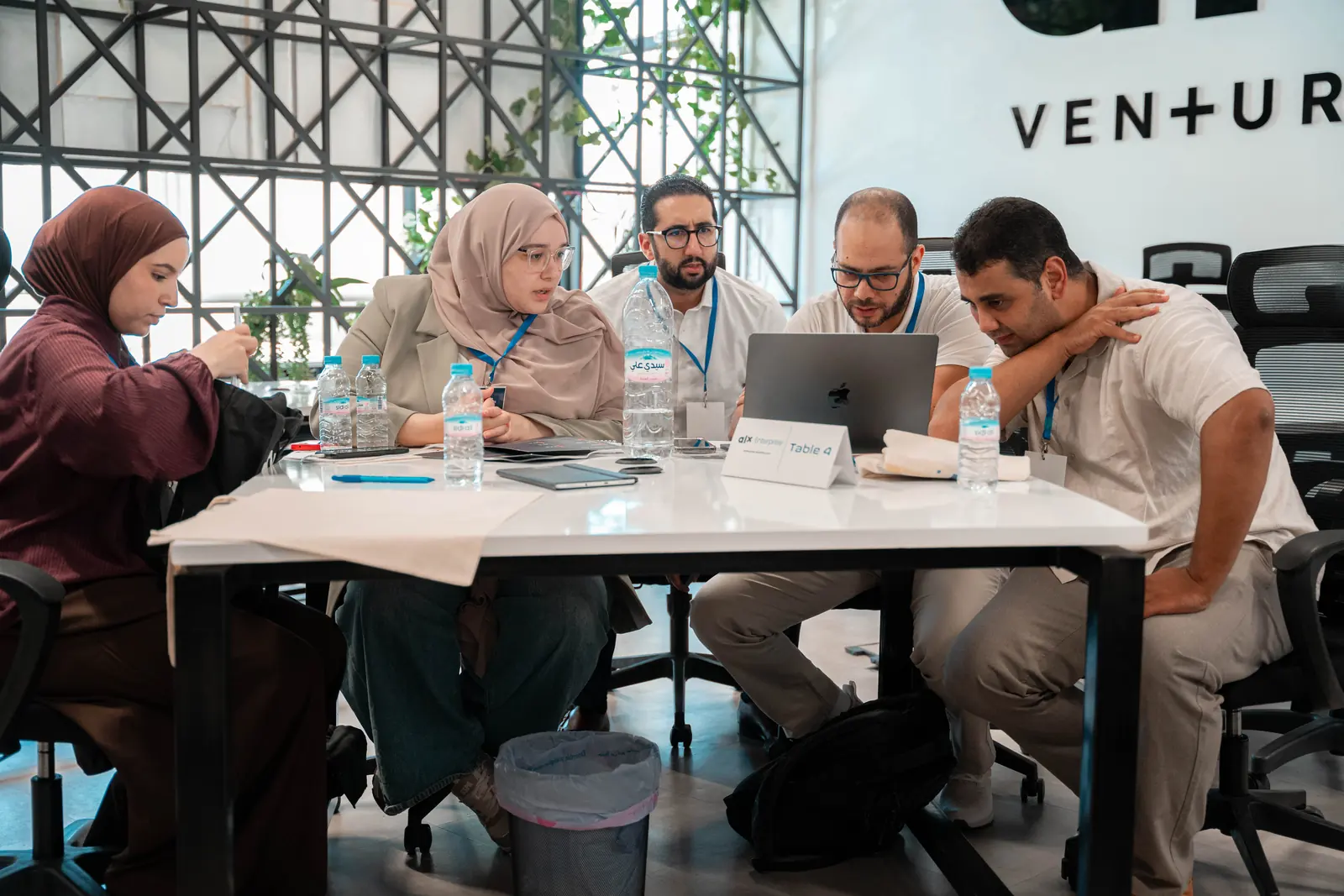
What struck me in rooms like that: the questions were rarely about tools. They were about people. Who on my team can do this? How do I train them without stopping the business? How do I know it's working? Those are exactly the questions a national talent plan has to answer too.
What this means for you
If you're early in your career: digital roles are opening up, and many don't require a traditional degree. The edge goes to people who can show proof of work, finish what they start, and learn in public. Join a community. It's the cheapest accelerator there is.
If you run a company: don't wait for the talent pipeline to deliver ready-made hires. Get involved early. Share your real job requirements with training providers, offer projects, and measure your own team's adoption, not just its training hours.
If you design programs: report activation, completion and placement, not just enrolment. And build the bridge to employers into the program from day one, not at the end.
Morocco has set targets big enough to matter. Hitting them will depend less on how many people we train, and more on how many of them we carry all the way into work.
Figures are from the Digital Morocco 2030 launch as reported by Hespress, HCP labour-market data for 2025, and the HCP, ILO and EU report on NEET youth (2023 data). More of my work at chafaijawad.com.